
Fr. Brian Murphy • January 28, 2026
THE NEW COVENANT
GIVEN IN THE SERMON ON THE MOUNT
For the next three Sundays, we listen to some of the Sermon on the Mount. Pope Benedict, in his book, Jesus of Nazareth, explains that this was where Jesus gave us the New Covenant. I summarise Benedict's teaching here.
Matthew is writing for Jewish Christians, who have been taught from their childhood about the Covenant God made with their nation, which they called 'the Law', and we call the 'Old Covenant'. They held that everything depended on keeping the Law which God gave them through Moses at Mount Sinai. It laid down a whole way of life which distinguished them from other nations and underpinned their identity as the chosen people of God.
In Jesus’ day, the main teachers of the Law were the scribes and Pharisees, and in the Sermon, Jesus warns the people that the virtue taught by those teachers will not work in the Kingdom of Heaven which he is bringing into being. The teachers of his day had elaborated a complicated system of rules to be kept if you wanted to be sure you were keeping the Law. That made people follow it slavishly. The New Covenant that Jesus brings is one of freedom.
That does not mean people can do just what they want, which is the false philosophy of today. It means that the Holy Spirit enters us and makes us lovers of the Father along with Jesus, and actually within Jesus. Then from our hearts will flow the power to keep the commandments. In the Sermon on the Mount he says that he has not come to destroy the Law, but to fulfil it, which means that his Spirit empowers us to act freely the way God wants.
The Jews, our ancestors in faith, call the Law, their way of life, the 'Torah'. They had received it from God in the incredibly dramatic events at Mount Sinai in the desert, when Moses brought down the Ten Commandments inscribed on tablets of stone.
Pope Benedict shows us that the Sermon on the Mount is Jesus going up another mountain to deliver the new 'Torah' of the New Covenant. The Old Covenant was a model of how we should be, but it did not empower us to fulfil it. Our will power alone, which the scribes and Pharisees exalted, will always fall short. Jesus teaches us that it is only the lovers of God who will keep it.
This is the very Jewish context of the Sermon on the Mount. Jesus is setting out the new Torah.
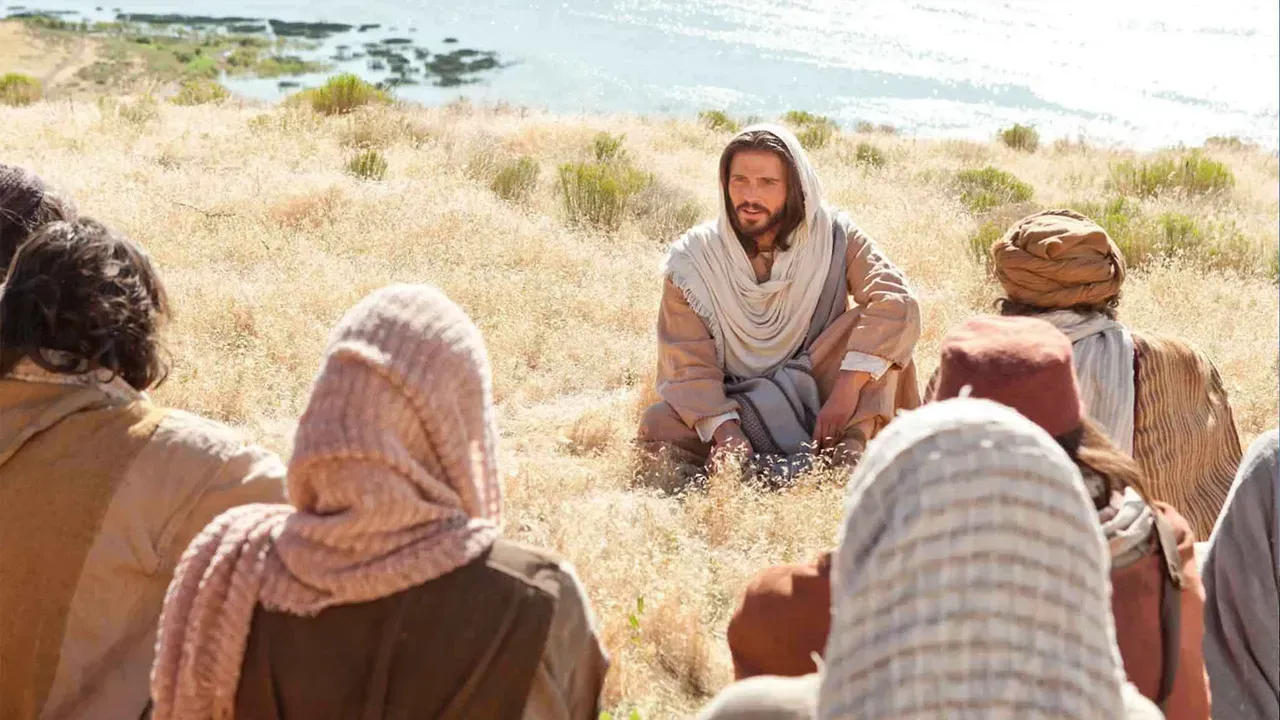
Jesus has, through his authenticity and charm, drawn people to sit in the sunlight on the mountain top. He begins with the eight Beatitudes. Here the contrast is with the Ten Commandments brought down from God’s frightening presence on the top of Mount Sinai. Those Ten Commandments have two positive instructions, to keep the Sabbath holy and to honour parents, the rest are negative - prohibitions, which tells us what not to do.
They are cold and rigid and full of implied threats of divine displeasure against those who brake them. Fear was an essential attitude of the devout Jew. Jesus gives us the Beatitudes which are God’s prescription of how to be happy. It is a loving Father who educates his children towards true fulfilment that Jesus reveals, not a harsh demanding despot.
As we prayerfully meditate on the Beatitudes, we catch a vision of the attitudes of the friends of Jesus who follow him on the way to the Father. They are certainly a challenge to those who strive for success and wealth in this world, but they are familiar to those who have discovered the wealth of God’s grace, which alone makes life in this world joyful and brings peace to those we live among.
After the Beatitudes in the Sermon on the Mount Jesus instructs us on what it is like to be perfect. Again this is challenging, but these teachings give us a glimpse of how the world can become free as each individual grows towards their own potential. It means loving our enemies, speaking the truth without fear, practicing virtues as a secret act of love for our Father, being free from worrying, not judging others and humbly sharing with those in need.
Moses followed up the Ten Commandments with one and half books of rules and regulations (the last half of Exodus and Leviticus). Jesus comes down the mountain and invites us to follow him freely as he leads us on the journey of life shared with him. He himself is 'the Way and the Truth and the Life'. He, the Son of God, who has made the lovely journey to become the Son of Man, leads each of us on our personal journey into God.
But it is not just personal: it is in a family of all the people he is gathering on the way to complete humanity. Our name, ‘Church’, means ‘the gathering’. The Old Covenant gave the Jews the identity of being distinct from everyone else; their bond was blood descent from Abraham and keeping the law. It will always be a temptation for Christians to do the same, forming themselves into an exclusive community defined by strict observance, but Jesus gathers all sorts of people into a family energised not by will power, but by the love which the Holy Spirit infuses.
Each is at a different stage, but each of us is being loved into wholeness, and, through the Spirit's great generosity, our goodness flows out of us to sustain everyone else.