
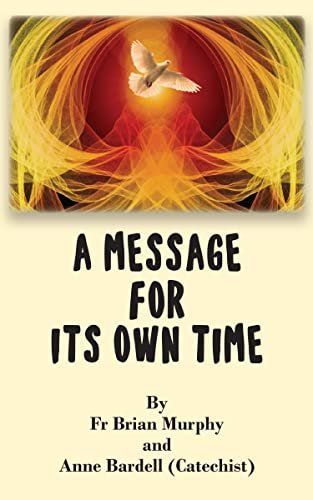


Our Book: A Message For Its Own Time

This book is written for Catholics and fellow Christians seeking a vision of the Church which inspires great hope in these challenging times.


The Church is God's process of healing and developing humanity. Father Brian Murphy highlights its history of change and development, and suggests how the present trials are intense preparation for the future. God has led us into the desert where all true renewal begins, in order to be prepared for a wonderful new spring. A third and greater age of the Church.


Within the book, Co-author Anne Bardell stresses the need for Adult faith formation, giving many practical examples.

She discovered that most Catholics seem content with their level of faith knowledge, however, once introduced to the deeper riches of the history and truths of the faith, people become eager to know more as their thirst for faith formation grew.

More about the book's content

Fr. Brian explains how each of us needs to become more deeply 'the type of worshiper the Father wants': that is to 'worship in truth' by rediscovering the treasures of the faith, and to 'worship in spirit' through contemplation, the prayer of the heart (John 4:24). Then the Church will be more effectively empowered to continue its mission to baptise all people into the life of the Trinity, and to renew the face of the earth.


Anne argues for the essential need for centres or hubs of faith formation in every parish. It is essential that practising Catholics are encouraged to access these hubs as a normal part of parish life. They should be accessible to everyone including parents leading their children through the Sacraments of Initiation. This requires the training of leaders equipped to support people as they travel ever deeper into their relationship with Jesus.


To purchase via email, please fill out and submit the form below, it costs £9.99 (free postage within the UK).


Also available online from

St. Paul's Book Centre, 84 Church St. Liverpool, L1 3AY

www.pauline.org

By Fr.Brian Murphy January 28, 2026
WHAT was Jesus talking about? Last Sunday’s Gospel tells us that Jesus went all over Galilee preaching “Repent, for the kingdom of Heaven is at hand” . Do we know what he meant by “repent”? English has a narrow definition of the word 'REPENT'. For us, it focuses on human sin. It is about having remorse for a specific sin which we have to confess and turn away from; it leads to a call for God’s mercy. The Gospel of Matthew was written in Greek. Here Jesus uses the word “metanoia”, which means “to turn your life in another direction”. Here the stress is not on what we turn from but where or who we turn to. It is intimately directed to the God of mercy, compassion, faithful love and grace. So Christian repentance is primarily about opening our hearts to God’s love. This January we begin Year A in Ordinary Time. It is a time of new beginnings. The Church, in choosing these readings on the 3 rd Sunday of Ordinary Time, is calling us to make the New Year’s resolution of turning more deeply to the God of love. It is a time to ask some questions. Am I coasting along - not depending much on the loving God? Am I comfortable as I am? Has my once radical ambition to follow Jesus like the fishermen who leave their boats and nets grown cold? Do I need to hear the divine call afresh? It is no use embarking with the Church on a new year of grace unless I am determined to open my heart more deeply to the infinite love which is calling at the deepest level of my being. In less than three weeks, Lent will start. Am I going to leave thinking about it till the last minute? Holy Spirit kindle in us the fire of your love!
By Fr. Brian Murphy January 25, 2026
THE NEW COVENANT  GIVEN IN THE SERMON ON THE MOUNT
By Fr. Brian Murphy January 23, 2026
LOVE v WILL POWER For years I have heard spiritual guides saying that it is our wills that are crucial in the prayer of the heart. I have to admit that I have found it difficult to make sense of this, because it sounds like muscular Christianity which I have found inadequate. I imbibed a strong moralising religion as a child, which meant learning what was right and willing myself to do it – this was especially reinforced by the image of a fearsome God who was keeping the score. The result was a sense of failure combined with frequent resolutions to do better. I know that was not true religion, which is about relating to the God who is love. What I was practicing was a throwback to Old Testament keeping of the law. I think that is what Jesus was talking about when he described John the Baptist as the greatest man born of woman, but added ‘yet the least in the kingdom of heaven is greater than he is’ . He said: ‘Since John the Baptist came, up to this present time, the kingdom of heaven has been subjected to violence and the violent are taking it by storm’ . (Matthew 11, 11). Muscular Christianity with its stress on will power uses violence against self and even against others to take the kingdom of heaven by storm. So why do the greatest spiritual guides keep saying that the will is central? A clue lies in The Catechism of the Catholic Church’s chapter on prayer (paragraph 2563). The explanation begins with the heart: “The heart is the dwelling-place where I live. According to the Semitic (Jewish) or Biblical expression, the heart is the place ‘to which I withdraw.’ The heart is our hidden centre, beyond the grasp of our reason and of other people; only the Spirit of God can fathom the human heart and know it fully.” The Catechism’s explanation then shifts the focuses to the heart’s movement and actions beyond itself: “The heart is the place of decision , deeper than our psychic drives. It is the place of truth, where we choose life or death. It is the place of encounter, because as images of God we live through relationship: it is the place of covenant” (my underlining). I find the words ‘decision’ and ‘choose’ more helpful than ‘will’. As I spend time in silent prayer seeking the face of God, with the conscious attempt to love him and be loved by him, it is the constant renewing of the decision and choice which gradually solidifies an attitude of love in my heart. Much of the time, there is no feeling or understanding of this living relationship, but, as time goes on, I am aware that that relationship is an attitude developing in my heart. That awareness rises up from my heart to my mind more and more throughout the day and night. It is like a catch of a tune springing up in the mind. But the word ‘will’ or 'will power' certainly describes the strength needed when there is temptation. I find that it is easier to resist temptation when I am aware of the Father’s love and Jesus’ closeness. It is when these are obscured that my will must operate most strongly. Usually it is not a matter of willing to do something, but rather a tenacious clinging on in the dark to the hand of God. That takes grit, in which I am often lacking, but as the relationship grows I expect my will to grow stronger. WHAT IS THE USE OF TEMPTATION? We might ask: what does temptation have to do with contemplation? Temptation is never far away from one who contemplates. The Evil One knows only too well what power for good flows from the lovers of God. He hates contemplation and tries to disrupt it whenever he can. Thankfully, God shields his lovers much of the time, but at others he permits us to be tempted. It is not that he is abandoning us then, but he is turning the Devils weapons back on his own head. Each time we overcome temptation with the help of God's grace, not only is the Devil weakened, but also our own inner self grows stronger. It is in that struggle, that we are tested and purified like gold in a furnace. When undergoing temptation it is important to remember four basic Catholic teachings. God will never allow us to be tempted beyond our strength. But often we will not appreciate what strength we have with the aid of God's grace until after struggle is over. All temptations eventually pass. Temptation is not sin. Sin is where we willingly indulge a temptation and welcome it into our souls. Then it restricts our capacity to experience God's love. In that state of deprivation we allow evil to become stronger in ourselves and the whole world. Temptations arise from virtues that are wounded and twisted. Anger, for instance, is a God-given power of our soul to remove evil with extraordinary force. When anger is diseased, that force is used to harm and hurt. The saints and spiritual teachers mean something much deeper than 'will power' when they use the word 'will'. We shall consider that in Chapter 12 in this series 'Prayer of the heart'. QUESTION How are you finding my thoughts on the prayer of the heart/contemplation? I am sure I myself only see a small part of this deepest activity of our spirit. Would you care to add something of your own thoughts and experience? Use the 'comment on this article' button below.
By Anne Bardell January 22, 2026
Have you read our new online book - ' Our Role in God's plan' click the link here and it will take you to it.
By FR. Brian Murphy November 5, 2025
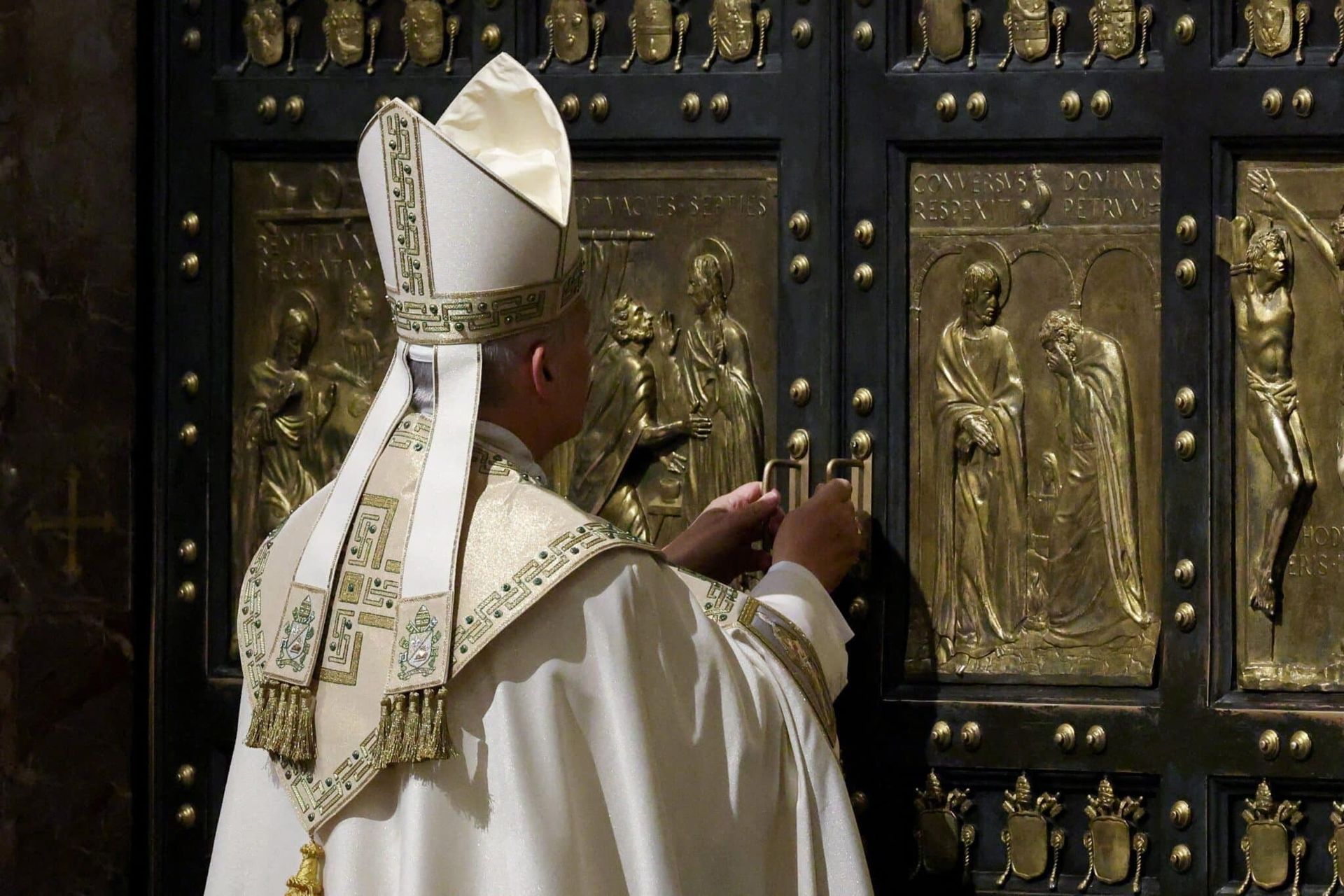
AGAPE (From Chapters 9 & 10 of our book A Message For Its Own Time .) THE HEART OF CHRISTIANITY The ‘spiritual revolution’ which is Christianity, is deepening and growing into its third phase. This epoch of great change that we are living through has such great potential. God is gifting us in the modern age with increasingly deeper insight into our humanity, such as psychology, clearer understanding of human development and vaster knowledge of the world we live in. This is causing a great deal of rethinking; our assumptions about other people and ourselves are being adjusted. The modern age seems at present to be a melting pot of ideas and theories, and these need Christian synthesising. Through the Second Vatican Council, the Spirit called us to take the modern world seriously, to dialogue with it, and to return to the basics of our own revelation and practice in order to effectively bless and enlighten the people of our day. In consequence a renewal of Christianity is developing which is still rather mixed up in most of our minds. The need to purify our thinking under the guidance of the Spirit is urgent. Where do the basics of Christianity lie? They are fundamentally summed up in John 3:16: ‘God loved the world so much that he gave his only Son so that everyone who believes in him may not be lost but may have eternal life. For God sent his Son into the world, not to condemn the world but so that through him the world might be saved’. It is the love of God which is the key to everything. That is Christianity’s basis. What does love mean? The word ‘love’ has so many meanings. We naturally think of it in human terms, but the supreme insight of Christianity is that we base our understanding of love on God’s love which is very distinct from human loving. To express this the New Testament coins the word ‘Agape’. Human love at its best can be heroic and sometimes seem superhuman. It can not happen without God’s help. But it is not always Agape. We need to understand what Agape is. In the English speaking world many of our bible translations translate Agape as ‘Charity’. That word has lost its power as ‘Charity’ nowadays largely means outreaches to help those in need. Consequently the meaning of Agape has become obscured for many of us. The word ‘Agape’ occurs over 200 times in the New Testament. Perhaps the most familiar passage where it is used is in 1 Corinthians 12-13 beginning with: ‘Be ambitious for the higher gifts, and I am going to show you a way that is better than any of them. If I have all the eloquence of men or of angels but speak without love…’ (1 Corinthians 12-13) . What is Paul getting at? He is addressing the Church in Corinth which had great spiritual gifts such as prophecy, healing, and words of wisdom, but it was riddled with division. Is he calling the community to have more consideration of each other, even the self-denial which puts others before self? No, he is talking about something much greater, something which heals the heart of the community, which is Agape. This passage (1 Corinthians 12-13) is used often at Christian weddings, with the intention of expressing the aspirations of those who wish to love wholeheartedly. Implicit in that is a prayer for God to empower us when we find love difficult. That is a gift greatly to be prayed for, and what better way for a couple to plight their troth than before the Father who alone can empower such love? But few couples imagine what they are truly asking for. Agape is something superior to human love as that is commonly understood. Paul, uses the Agape word for love in 2 Corinthians 5: 14 when he says ‘the love of Christ impels us’. Translators of the Bible take different stabs at delivering the meaning. Some say it “constrains us”, as though we are tied up by it and coerced. Some say “overwhelms us” as though we are lifted to a different dynamic than love as we normally experience it. Some say it “urges” us as though it is a deeply felt need. Clearly, Paul is attempting to describe a different reality to what we normally mean by love, even at its most heroic. The Encyclopaedia Britannica defines Agape well: "Agape , Greek agapÄ“, in the New Testament, the fatherly love of God for humans, as well as the human reciprocal love for God . In Scripture, the transcendent agape love is the highest form of love and is contrasted with eros, or erotic love, and philia, or brotherly love." This rightly states that Agape is the highest form of love, God’s love for us and our loving God back. Paul, in 1 Corinthians: 13, calls it the gift that is ‘better than any’, for which we should ‘be ambitious’. It enters the human heart and transforms it gradually. It is the true meaning of being justified or righteous. By it, our hearts are righted, set right, stood on their true basis, which is to be the beloved of God. Agape does not spring from our natural human powers to love as we know them. It is the transforming of the heart after it has entered ‘the gates of holiness…the Lord’s own gate where the just may enter’. This is a gate which the Lord alone can ‘open’ (Grail Psalm 118: 19-20). With it, the human heart is righted, because it was originally and fundamentally made for this divine love to be its primary source of life. We are the beloved children of God beautifully created to live in God’s family. That fundamental rightness was gravely upset at the Fall of mankind. But it has been wonderfully restored by Christ’s work on Calvary. Agape is the ‘greatest of all’ of the gifts of God, to be sought before all others, because it makes all other loves Christian. It purifies our human love gradually, and must be continually prayed for. In so far as we fall in love with God, we will be enabled to fall in love with everyone. Contemplation In the Our Father, when Jesus shows us many forms of prayer. He puts first hallowing the name of the Father. This is not just praise with lips and songs, but reverence and awe - ultimately adoration. I have seen a group of youngsters joyfully praising God with the enthusiasm so characteristic of youth, but then become quiet in profound adoration. Contemplation is not Meditation The habit of adoration arises from the practice of contemplation. It is distinct from meditation. Meditation is the raising of our minds to God through considering some truth about him which arises from study or spiritual reading or lectio divina or other forms such as the prayer of imagination. It leads to gradual enlightenment, but it usually is an exercise of the intellect which, at its best, can lead our hearts to burn within us. It strengthens conviction and it motivates us to hope. It disposes us to receive the gifts of the Holy Spirit especially wisdom, understanding, and knowledge. It is an essential prayer for maturing Christians, and prompts us to love God. We prepare our minds for it through focusing on truth, and we will often have to keep refocusing because our busy minds are easily distracted. However Meditation is not the path to the supreme gift of the Holy Spirit, Agape; contemplation is. Meditation is the raising of the mind to God, contemplation is the raising of the heart. Meditation exposes the yearnings of the heart for God; contemplation is the opening of the yearning heart to meet God in love. Contemplation is primarily not about what is happening within our selves; it is encountering God and knowing him. Then words fail. Concepts are inadequate. Only the heart is open to God. Jesus instructs us to use all the other forms of prayer that he includes in the ‘Our Father’, but the prayer that he puts first, contemplation (hallowed be thy name), is the deepest prayer of the heart and we are called to give time to it. We leave aside concerns, worries, thoughts, feelings and stand before God with hearts open. That is how we come to know not about him, but to know him - through love, Agape. The author of ‘The Cloud of Unknowing’ writes: ‘God’s grace restores our souls and teaches us how to comprehend him (God) through love. He is incomprehensible to the intellect. Even angels know him by loving him. Nobody’s mind is powerful enough to grasp who God is. We can only know him by experiencing his love’. In contemplation we have to enter the cloud of unknowing, set aside emotions and thoughts and images which can never grasp God, and just long for God. Distractions will come and so will deep understandings, but these need to be turned away. Gradually with time and perseverance, the sense of God’s love deepens and we become more and more devoted to our Father. Also we begin to experience Jesus’ love for everyone. As we progress we can experience dark nights of the senses and also of the soul, but the progression is into deeper and deeper loving union with God. Jesus took Peter, James and John up the mountain of Tabor to witness his glory, but when the ‘bright cloud’ (Matthew: 17: 5) descended and the Father’s voice was heard, they were terrified and fell face down. In his mercy, Jesus treats us more gently. He himself leads us into the cloud of the mystery of love to meet the Father. This is Agape, the greatest gift of God. THE CHRISTIAN HEART T he cry of God’s children Through Agape, the Holy Spirit releases within us the cry of the child of God: ‘Abba, Father!’ (Rm 8: 15). St Augustine in his Confessions writes: “Late have I loved you, Oh Beauty ever old and ever new: late have I loved you. And see, you were within and I was in the external world and sought you there, and in my unlovely state I plunged into those lovely created things which you made. You were with me, and I was not with you. The lovely things kept me far from you. You called and cried out loud and shattered my deafness. You were radiant and resplendent, you put to flight my blindness. You were fragrant, and I drew in my breath and now pant after you. I tasted you, and I feel but hunger and thirst for you. You touched me, and I am set on fire to attain the peace which is yours”. The effects of God’s children A person who is developing in Agape, becomes more and more a fountain of grace and direction to others. The gifts of the Holy Spirit grow as fruit from their lives: ‘love, joy, peace, patience, kindness, goodness, trustfulness, gentleness and self-control’ (Galatians 5: 22). How much we strive through our own selves to produce these fruits, and yet they flow from the lovers of God. Jesus teaches us to put our selves humbly before the Father so that our inner selves, our spirits, can emerge. Agape makes us naked before the Lord and other people. We clad ourselves with so many coverings. Our skin is vulnerable. All of it reacts to touch, especially if that touch is painful; it is the same with our sensitivities. So we work hard at developing a suit of armour to protect ourselves. This may give us a sense of security, but it also increasingly isolates and cripples us, though even the best armours have chinks. From our earliest childhood, our experiences of pain and the failures of love induce us to construct this armour. Bit by bit, with our cooperation, the Father’s love unbuckles the different layers of armour, allowing his love, breathing through ours, to cast his light more effectively in our world. Do not be surprised if he unbuckles it from the inside; the transformation begins in the heart, and only gradually penetrates into our words and deeds. We can see God acting in this way when, on the shore of Galilee, Jesus took Peter aside and three times asked his three times betrayer ‘do you love me’. The third time, Peter humbly, almost tearfully, confesses ‘Lord, you know I love you’. He was being called to an identity different to the strong individual he thought he was. The man, who drew the sword in Gethsemane but then ran away to save his skin, began to be a new creation. He was sensing and choosing a trajectory, the course of which would transform him into one of the dearly beloved lovers of God. Reality check God’s love gradually enables us to grow. Lovers cannot hide their true selves from each other. That is frightening because, as their brokenness is revealed, they become dependent on the love of the other to aid their healing. Faults which they could not face or fix themselves, their very vulnerability, need the lover’s kiss. Sadly, that is often not forthcoming; many lovers turns their face away. God never turns his face away. As his love penetrates the exterior of our hardened hearts, the brokenness of our hearts of flesh emerges bit by bit. It is still frightening, because we can be shocked by recognising wounds and failures which we had not been aware of, or excruciatingly shamed by admitting those we have never been able to fix. In order to heal and restore us, he will sometimes lead us into wild and frightening places calling us to face the demons that obstruct our way to fuller life. He does not hide the fact that picking up the cross daily is the way forward, but he is right there on that cross with us until it is accomplished. Oh, the joy and the peace as we become more free! Western culture idealises the right of every human person to be free, and that usually means permission to do what we want. The freedom God brings about within us is the freedom to be the greatness that we really are. Gradually we are transformed into the utterly unique image of God that each of us is. The life force of God which is gradually released into his servants, his Spirit, moves more freely in us. It is not techniques that we acquire, but life. Bit by bit it dawns on us that there is nothing else worth doing. And the process continues along the long path of becoming ‘like stars’ (Daniel 12: 3). Achievements without Agape If I dedicate my entire life to service, or use my talents superlatively, or bear unimaginable burdens, but am without Agape, I am only working out of a self that is hidebound by my armour. One day, despite my personal efforts or talents, my energy will dry up. Then I will be left languishing inside my suite of armour. It is dark there and lonely. But, if I have sought the supreme gift of Agape, and walk as one of God’s lovers, seeking his face daily, learning to cherish his presence at every step, I do not have to be superhuman or a hero. I will radiate God wherever I am. I will, in the midst of tragedy bring hope, in a broken world bring joy, and in turmoil peace. As I willingly receive the gift of Agape, it will gradually develop me. I will not lose my identity as I become a channel of God’s love. I will achieve my true identity. The more people see Christ in me, the more they will see the real me, where the Lord has help me to lose the parts that I thought made me unique and valuable. I do not need them. I am unique and valued. I am one of God’s chosen lovers. I will not be afraid of defeat and failure, because ‘all things work together for the good for those who love God’ (Romans 8: 28). Just like on Calvary, all failure will become development. Huge, even gigantic human efforts will fail to bring about a healed and wholesome world, but the actions of those who are developing in Agape will ‘renew the face of the earth’ (Ps 104: 30). The Good News we proclaim introduces people to the truly liberating energy of God, our lover. As we grow into the state of being the beloved children of God, we are revealed as the ones for whom creation is ‘waiting with eager longing’ (Romans 8: 19). As St Paul wrote to them, the Church of Corinth was proud of the wonderful charisms of healing and prophecy and teaching that they were experiencing. How much more would they have fulfilled their mission if they had put Agape at the top of the wish list for divine gifts! It seems that many of them failed to grasp this deepest teaching of Paul, because some forty years later, the fourth pope, St Clement of Rome, wrote them a long letter once more urging them to set aside their divisions. The human heart so often focuses on minimal aspirations rather than daring to hope. The next stage of Chrisianity I believe that, in our strange time, God is calling us to focus more urgently on the highest path to growth, Agape. In his poem A Sleep of Prisoners, Christopher Fry expresses it as follows: The human heart can go the lengths of God… Dark and cold we may be, but this Is no winter now. The frozen misery Of centuries breaks, cracks, begins to move; The thunder is the thunder of the floes, The thaw, the flood, the upstart Spring. Thank God our time is now when wrong Comes up to face us everywhere, Never to leave us till we take The longest stride of soul men ever took. Affairs are now soul size. The enterprise is exploration into God. The time we live in is enormously important in the process of salvation. Nature and history cry out increasingly and urgently for the human exploration into God. That urgency has been infused into us by God. The heart of the Trinity has opened and burns with desire for union with us. What Agape is not In our frenzied world of today, a new industry of wellness is emerging. To counteract the obsessive use of media and the hurried pursuit of goals, various ways of stilling ourselves and allowing our souls to breathe are flourishing. These are healthy and helpful, and certainly better than using drugs or alcohol. They might prepare us for contemplation, but mostly they seek to balance our selves so that we can be more in control. They are human techniques that lead us back to our selves. Agape leads us to the Father. It grieves me to see how some Catholic schools embrace these methods, because it is evidence of how we have forsaken the habit of introducing our children to the great tradition of Christian contemplation. Yet I have seen a school staff struck with wonder when the children of a whole primary school assembly went into deep stillness and contemplation. We offer our children the notions of the gifts and fruits of the Holy Spirit, but we should start with Agape. Jesus says of children: ‘Let them come to me, for it is to such as these that the kingdom of heaven belongs’. I would rather have a whole system of guiding people in holiness and the knowledge of God than the most impressive school system. The opinion that I have just expressed implies a revolution in our approach to education in our part of the world which would demand courage and dedication if it were put into practice, but is it not the reason why our Father has sent us into the vineyard? ‘The Spirit breathes where he will’ (John 3:6) Throughout my priestly life, I have been privileged to encounter souls that have been led into deep devotion through many paths such as Eucharistic Adoration, the rosary, praying in tongues and the celebration of the Eucharist, and also through suffering or arduous toil patiently endured. As they have matured, they have become leaven in the dough of this needy world. The lovers of God are all around us, usually hidden, but radiating Agape. I cannot draw a map of how the Holy Spirit flows, but I am sure there is an imperative need to give much more Church time to nurturing the ambition for this highest gift. From Agape all other Church outreaches should flow, and would flow wonderfully. T he Sacraments of Reconciliation and Marriage A greater emphasis on Agape can throw light on some of our current problems in Catholic practice such as the reluctance of people to avail themselves of the Sacraments of Reconciliation and Marriage. Our practice of the Sacrament of Confession often focuses on human motivation by the cold examination of sins and their opposing virtues to elicit sorrow and a firm desire of amendment. This is necessary in cases of deeply mortal sin. Normally, though, it should be where priest and penitent exercise the sacred art of discerning the movement of God’s Spirit in the soul of the person being reconciled. The Sacrament of Reconciliation is the gracious touch of God for one who is earnestly laying bare their poverty of spirit, to encourage them and draw them more deeply into the kingdom of God. Reconciliation should be a supremely rich encounter with Agape. The poor woman in the Gospel, who was publicly humiliated as her adultery was cruelly publicised by vicious plotters, did not need stoning, she needed to encounter the divinely loving gaze of the one writing on the ground (John 8: 1-11). Only then would she be set on the path towards sinning no more. The paralysed man lowered through the roof by his friends experienced that same infinite love as Jesus told him his sins were forgiven. It gave him overwhelming relief which contributed to the loosening of his seized-up limbs (Mt 9:1–8). I think the greatest surprise for both these people was the realisation that this person understands me; he is like me; he has been through these temptations himself and overcome them, and his love radiates the love of the Father of light who cherishes me and has invincible faith in me. We read in 1 Corinthians 13 ‘Love is patient, is kind, does not envy, is not boastful, is not arrogant, is not rude, is not self-seeking, is not irritable, and does not keep a record of wrongs. Love finds no joy in unrighteousness but rejoices in the truth. It bears all things, believes all things, hopes all things, endures all things’. Do we see this only as a check-list of virtues for us to aspire to? Or do we see this as a description of God himself? The woman accused of adultery and the paralysed man caught a wonderful glimpse of the loving God in the eyes of Christ. They encountered the Father who ‘keeps no account of wrongs’, and ‘is always ready to excuse, to trust and to hope’ (1 Corinthians 13: 6) in them. The true healing and strengthening of their ‘innermost selves’ (Ephesians 3: 16) had started. The Sacrament of Reconciliation should be prepared for and celebrated ioninthe firm belief that it is another step along the road to perfection. Similarly, how different a Christian marriage becomes if the couple seek Agape together! The lives of such couples as Saints Louis and Zelie Martin, the parents of St Therese shine out as examples of what the Sacrament of Marriage really achieves. Their faithful love and holiness produced daughters who were saints, one of whom is a Doctor of the Church, a supreme teacher of holiness. Why does our marriage preparation stress human relationships and fail to enlighten couples about what happens to their love when they together seek the face of God above all else? ‘Set your hearts on his kingdom first, and on his righteousness, and all these other things will be given you as well” (Matthew 6: 33) I wrote elsewhere in this chapter that the transformation (of our lives through Agape) begins in the heart, and only gradually penetrates into our words and deeds. St Catherine of Siena puts it like this: ‘ Truly the Soul’s being united with and transformed into him [God] is like fire consuming the dampness in logs. Once the logs are heated through and through, the fire burns and changes them into itself, giving them its own colour and warmth and power. It is just so with us when we look at our Creator and his boundless charity (Agape). We begin to experience the heat of self-knowledge – which consumes all the dampness of our selfish love for ourselves. As the heat increases, we throw ourselves with blazing desire into God’s measureless goodness, which we discover within our very selves. We are then sharing in his warmth and in his power’. Physical fire consumes and annihilates. The fire of the Holy Spirit does not; it matures and enhances our true selves. The adherents of some religions seek to lose their selves in the ultimate reality of universal consciousness. For Christians, eternal life is all about becoming our true selves through harmonious and full relationships and interplay with God and all creation. Jesus said: ‘Eternal life is this: to know you, the only true God, and Jesus Christ whom you have sent’ (John 17: 3). When the Holy Spirit works in us through Agape, we are already wrapped in the dynamic of eternal life here on earth. That is the ‘power from on high’ (Lk 23; 49), the deluge which Jesus told his disciples to faithfully await; that alone is the fuel for the commission he gave them to transform the world. ‘Our struggle is… against …the spiritual forces of evil in the heavenly realms’ (Ephesians 6: 12). This third phase of the Church, the third phase of the spiritual revolution which God is gradually conducting in this world, comes as many fruits of the Spirit are ripening. Countries which have heard the Gospel are experiencing peoples’ claiming the right to determine their own destiny, and, as we see in the Putin/Ukraine conflict, those who have usurped power for too long are reacting with brutality. Yet the poor and the meek of neighbouring countries opened their doors to the mothers and children of the conflict. Churches frequently became the focus of practical help. Political leaders were seen visiting services of prayer. At the same time, worried people watch, sensing the dimension of the sacred which, in their comfortable prosperity, they have neglected. The false optimism of western prosperity with its neglect of the poor is yielding to unease and an opening of eyes to the reality of evil. Those who saw the world through rose tinted glasses are becoming dismayed, and those who claimed the moral high ground while scorning those who disagreed are discovering that both their attitudes and those of their opponents are far from answering the deepest yearnings of humanity. We are entering a time when those countries which have blithely, even methodically, thrown out the message of Christ are going to become more earnest in seeking authenticity. Christianity itself is facing up to and dealing with problems within itself which it has evaded. The stage is being set by God for the Church, renewed through deepening its members’ holiness, to offer afresh the message of God’s love and salvation. Political pundits hurry to define the near future as a ‘new cold war’, but the children of God should see it as a special time in the progress of the spiritual warfare Jesus came to cast upon the earth. The millions of members of the Royal Priesthood should not be captivated by the preachers of dread and futility, but become renewed in the vigour of the Spirit. Maybe we have to resurrect an old word, and recognise that we have to become more deeply devout. That word places the emphasis primarily on seeking the face of the Father in contemplation, from which authentic actions for peace and love will flow. These actions are the ‘spiritual sacrifices’, the acts of loving service among which prayer and the faithful fulfilling of small duties are the biggest part. It is not major strategies which are the main weapons in the armoury of the children of God. We fire bullets of faithfulness, seldom missiles. God looks after the strategies. Most of today’s wars and conflicts are about securing energy resources to enable people’s life styles to prosper. For us Christians, our energy comes from faith, hope and Agape, powers which God gives to those who ‘worship in spirit and in truth’ (John 4: 23-24) . In today’s many outbreaks of war and violence, the distortion of truth through propaganda is rife. But there is also an alarming eruption of truth distortion in all areas of life. Here again the spiritual warfare with Satan is coming to a head. Polarisation and hatred are weighing down heavily on civilisations that thought themselves advanced and sophisticated. All over the world the dissensions of the early Church of Corinth are being repeated. St Paul’s remedy is just as urgently to be sought today: to ‘be ambitious’ for the ‘way that is better than any’: that is Agape. As we Christians become transformed and gently permeate our world with the fruits of the Spirit, this current critical battle in the spiritual warfare will be won. ‘Not on this mountain nor in Jerusalem’ (John 4: 21) The Samaritan woman that Jesus met at the well questioned where true worship is centred. He replied that it is not in a place but in each mind and heart. So we find that Jesus, during his ministry, ‘taught his disciples’ (Mark 9:31). His teaching opened people’s minds, to know the truth about God. That gives rise to ‘worship in truth’ (John 4: 23-24). But the knowledge of God cannot stay in the mind. It is only the key to opening the door of the heart to ‘worship in spirit’ . ‘That is the kind of worshipper God wants’. Jesus was talking about Agape. The harvest of love Jesus told us ‘ when you see me you see the Father’ (John 14: 9). Wherever he went, people instinctively sensed Agape, the love of the Father. So wondrous was the healing personality of Jesus, and so compelling his words that people dropped what they were doing and flocked to him. Their hunger for God moved him to infinite zeal and compassion. Listen to Jesus’ reaction as he reflects on the multitudes he attracted: ‘And when he saw the crowds he felt sorry for them because they were harassed and dejected, like sheep without a shepherd. Then he said to his disciples, "The harvest is rich but the labourers are few, so ask the Lord of the harvest to send labourers to his harvest"’ (Mt 9: 36-38). The labourers we need are not hired men or women who are not motivated by sharing Christ's love of his Father, but are driven by a mindset which aproximates to Christianity, but not by hearts driven by Agape, the continual seeking of the face of God . It is no wonder that their work seems so fruitless. Also, a more profound ambition for the divine gift of Agape would dispel much of the confusion we see in the Church today. 1]
By Fr Brian Murphy August 15, 2025
SOME OF THE MARVELOUS CATHOLICS THAT WE MET AT NEW DAWN 2025 I was Chair of the committee who organised the Charismatic Days of Renewal at Hopwood Hall in the 1970s and 80s, a position I left to concentrate on parish work for the next 35 years. It has been interesting to visit the New Dawn Charismatic Conferences in 2024 at Walsingham and 2025 at Barton. What struck me most was the way the first experiences of spiritual renewal of the early days has now matured into a lay people increasingly stepping forward with dedication and authority to serve the Church in cooperation with the clergy. The authority comes from increasing closeness to God and dedicated attention to their own formation. I heard the stories of some amazing people – let me tell you about a few of them. Deacon David (himself not a layman) told me of 5 men entering the Church in his parish in Northwich this Easter. He called it “the Quiet Revolution”. If you look on this website at Straws in the Wind you will read more about the “Quiet Revolution”. People are increasingly turning to the Church in this age which has drenched them in trivia and misinformation, especially men. Karen told me about the Perpetual Adoration in her Church, St Joseph’s in Stockport, and how it is changing the parish and the area. Where there is Adoration, there is contemplation, which leads to intercession, the prayer that moves mountains. That is what our new book is about; it is the secret weapon of the Church. Have a look at Our Role in God’s Plan on this website. Declan, a psychiatric nurse, told me about how he and others organise a study session on Zoom from 7.00 to 8.00 every weekday morning. Last year they went through the bible with Fr Mike Schmitz, and this year they are following his Catechism in a Year. There are about 70 people taking part, and around 200 have participated. We put our ministry, Hopeful Catholics , under the patronage of St John Henry Newman. Our inspiration is this vision of his: ‘What I desire in Catholics is the gift of bringing out what their religion is. I want a Laity, not arrogant, not rash in speech, not disputatious, but people who know their religion … who enter into it, who know their creed so well that they can give an account of it, who know so much of history that they can defend it.’ Newman would rejoice to hear of this early morning study. Nancy May , an ex-lawyer from Edinburgh, spoke with joy of her Masters Degree in Theology, which she had taken not so that she could create better job opportunities, but so that she could serve the Church in her parish, especially as a catechist for first communion children. She isn’t being reactive by just repeating material she has been given, but proactive seeking to give it her best. Rachel , who works for Rachel’s Vineyard, told me of how her own experience helps her to help women who have had abortions. She said that many despair because they think it is the unforgivable sin, and that almost all those she encounters were broken people long before they had their abortion(s). Her organisation offers reconciliation with God, integration of shattered selves and “futures full of promise” (Jeremiah 29: 11) not just to women who have had abortions, but also to mothers, fathers, grandparents, any family member and also those that worked in the abortion industry. She asked me to include this: Hurt by abortion? Contact rachel@rachelsvineyard.org.uk rachel@rachelsvieyard.org.uk rachel@rachelsvieyard.org.uk Owen , a young man who works for SPUC, the Society for the Protection of the Unborn Child , told me of his work with young people and students. It is very tough in Universities, where the Pro-abortion lobby are fanatically dominant. Yet there is change. Do you remember the shocking scenes in Manchester University in March of last year when some Pro-life Manchester students, most of whom are Catholic. left “terrified” as an out-of-control mob raised barricades, spat on them, threatened, and wished rape on them for their pro-life views? Owen said that on visiting them this year a remarkable thing has happened; many other students who were silent of hadn’t really thought about the issue had been so disgusted at the actions of the mob that they are coming out in support and genuinely inquiring about pro-life matters. That is a picture of modern-day martyrdom. Owen himself told me about how his friendship group at home numbering 16 were all atheists, but 6 of them are now Catholics. At university 5 friends joined the Church as well, also their professor who is now teaching scripture in a seminary in the USA. One couple spoke of their deep disappointment as their flourishing parish changed when a new parish priest came, but their charity and love are gradually having an impact. They are beacons of Christ’s hopeful people. It is not always bright skies; we will often be asked to pray our way through storms and dark moments, but “for those who love God all things work together for good,” (Romans 8: 28) Helen let us know about her own journey and how she was helped by Beginning Experience a ministry in the Catholic Church that addressed the needs of those who experienced loss of a spouse - whether through widowhood, separation or divorce. She is now working with them to help bring healing to others. These are just a few of the spirit-led Catholics we encountered. It was a joy to be there and so hopeful!
By Anne Bardell August 9, 2025
Did you attend New Dawn in Manchester 1st-3rd August?
Christian joy comes from the firm conviction that our Father in heaven is bringing about a renewa
By Fr. Brian Murphy July 26, 2025
What is the difference between fun and joy? The first is temporary emotions the second is a permanent state of mind. Christian joy comes from the firm conviction that our Father in heaven is bringing about a renewal of the face of the earth. Our joyful hope is not an emotion, it is a response to the fact that this is true. Our wonder proceeds from the realisation that the Father has sent his Son to earth in order to bring about that restoration. As we come to know Jesus our amazement just keeps growing. We are so blessed! In recent times, while the world is filling with negative let-downs, and noisy disagreements, we Christians have been undergoing a process of correction and renewal from our roots upwards. We have found this challenging and painful, but our Father has directed it in order to prepare us for the next stage of expansion of his Kingdom. It is almost complete and the time of growth is beginning. Some might say we are not ready in the West because of the shrinking of religion, but it is when we own up to our weakness that God is most able to show his strength. Look at the few insignificant individuals praying in the upper room on the eve of Pentecost. What God did in the next 24 hours with them was the definitive beginning of the final age of humanity. It is in the West that the greatest cleansing of the Church has been focused, because it is in the West that the new stage of Christianity is being born. At the same time that God has been cleansing his Church, he has, in the West, been revealing wonderful potential for human development through scientific progress. This has inflated a huge balloon of human self-satisfaction, but through various crises he has allowed that to be well and truly punctured. He has caused people to become disillusioned in order for them to turn to him; then we will be able to use the great richness he has blessed us with to make a better world than we have had before. Now people in the West have begun to search for real meaning. Zechariah (8: 23) prophesied: "Yahweh Sabaoth says this. In those days, ten men of nations of every language will take a Jew by the sleeve and say, 'We want to go with you, since we have learned that God is with you.' " The place of the Jews in God’s plan has now been widened to all who believe in Christ. That’s us. Are we ready? This book is our attempt to help you deepen your understanding of what God is doing in our day, and to throw light on how you are crucially involved. We are putting it on our website as it is developing so that your comments can help us complete it .
By FR. Brian Murphy July 25, 2025
WHO WILL BREAK THE CYCLE OF DESTRUCTION?
By Fr. Brian Murphy July 24, 2025
CHAPTER 3 OUR PART IN THE REDEMPTION OF HUMANITY The new age The passion, death and resurrection of Jesus is the central event in human history. It was the moment when all history turned round. The age of human disfunction is doomed, and the age of the humanity living in the Spirit of God has begun. At the Last Supper, Jesus emphasised to his people, who dreaded losing him, that he had to depart from them physically and go back to the Father so that he could return among us spiritually. They would know him in a more immediate way – in their hearts. Now we know him in that same way. This equips us for the next stage of redemption. [If you want to read more about the primary necessity of knowing Jesus, CLICK HERE to access Chapter 2 of our book 'A MESSAGE FOR ITS OWN TIME' . Once Jesus had broken the power of all sin, it would be the time for us to play our part as his sisters and brothers, the children of God who reclaim the wholeness and restoration of humanity. Our Father had created us to be like him in all his splendour of righteous activity. Now that we were redeemed, he would not diminish the dignity he had bestowed on us by denying humanity the right to retrace the crazy steps that we have taken away from his love. For that to happen we needed to relate to him in a more mature way. We need to join in his very life, by letting the Spirit reveal Jesus to our hearts so that we can know him and relate to him personally. Jesus had drawn all of us into himself to redeem us. Now it was time for us to draw Jesus into ourselves to complete the redemption. The final age in the story of humanity began – the restoration of all things in Christ with our full participation. Jesus called this process his “Kingdom”. The functioning of the Kingdom In the Trinity there are three absolutely individual persons. At the same time they are one: they live and move and have their being within each other in the mystery of infinite and immaculate love. The Kingdom of God functions in a similar way. Each human being is required to individually take up their role, and, at the same time, they become united in a mysterious communion formed by the Holy Spirit. God revealed this new two-fold dynamic when the Spirit descended at Pentecost: All those who gathered to hear the apostles heard in their own individual languages the one message spoken by the apostles in Aramaic. God was beginning to replace our hopeless division with his gift of unity. We are told that on that day about 3000 people “ were added to their numbers” (Acts 2: 41). The process they went through was “ to repent, be baptised in the name of Jesus” , and “receive the Holy Spirit” (Acts 2: 38). This was a two-way process. Each had to turn away (Repent) from their previous orientation and give their trust to Jesus; then the Holy Spirit would come to them to empower them to live in communion sharing the life of Jesus. We are being formed into the Mystical Body of Jesus The Holy Spirit had formed the physical body of Jesus in the womb of Mary. He is now forming the spiritual (mystical) body of Jesus in the womb of the world. He is drawing mankind together into one mature humanity. This process was first given the name, “the Gathering” using the Greek word “ekklesia”. The English term for it is “Church”. Jesus said that the Church is like a tiny mustard seed which grows into the biggest bush where all the birds of the air find a home. The Church is growing and developing through time. As the mustard tree sends its tap root burrowing deep down into the nourishing earth, the tap root of the Church is people burrowing down into intimacy with Jesus. Just as Jesus called his apostles individually, he calls us individually to know him. The more we grow in his friendship and are inspired by him, the more we mature into who we individually really are, and the renewal of the face of the earth advances. It is a process which is developing over time. We should not be surprised if some of the development seems slow; the Spirit works deep on the interior of humanity, not superficially. God writes straight with crooked lines We should not be surprised if there are parts of his work which seem as yet incomplete, because the breath of the Spirit acts through human brokenness. All genuine Christians are sinners who will constantly get things wrong. Our work will always be imperfect, but God accepts our efforts when we try our best, and uses them as stones in the building of perfect humanity. Anybody looking for perfection in the Church is bound to be disappointed, but if we look at the Church over time and its influence on the development of humanity, we will see the steady progress that God is directing using very unfinished persons. They will also find a continuous flowering of heroic holiness. The frequency of its occurrences are unequalled outside of the Church – proof that here is the epicentre of God’s activity in the universe. The spectrum of how people are connected to Jesus We have to see a spectrum of how people are connected to Jesus. At one end, there are the people of good will that the angels sang of at Christmas, who do not know Jesus personally, yet, in pursuing goodness as they perceive it, they are in a hidden way uniting themselves to him. They will recognise him when the time comes for the scales to fall from their eyes. At the other end of the spectrum there are the great saints who shone with divine life. The spectrum is never static, always developing as the Spirit, who blows where he wills, is intricately fashioning the new humanity. [If you want to read more about Jesus being the only way to the Father, CLICK HERE to access Chapter 12 of our book 'A MESSAGE FOR ITS OWN TIME ]

EXPLORE THE CONTENT

Below you will find chapter headings and introductory text from the book 'A message for It's own time', published through: Amazon
OVERVIEW OF THE CONTENTS

SECTION I - THE THIRD AGE OF THE CHURCH.


Chapter 1: I am going to lead her into the Wilderness and Speak to her Heart:

God is not chastising his Church but preparing a great new age.                        


Chapter 2: Everything Flows from a Close Friendship with Jesus    

Meeting Jesus in his Body: his Church      


Chapter 3: Our Origins: 

The story of Adam and Eve is not real history; 

it is how God tells us about himself and us; before sin, we were originally innocent.


Chapter 4: Our Destiny: 

The story of how every baptised person has innocence restored and becomes  a Royal Priest.      


Chapter 5: How our Royal Priesthood works.    

Through loving service, offering the spirtual sacrifice, the children of God bring about the   glorious liberation of creation. 

Ministerial  priesthood is different, but complimentary. 

Our need for greater maturity.                                


Chapter 6: Knowing the Scriptures

Catholics  need greater familiarity with the Word of God by which God reveals himself to us.     


Chapter 7: The Reason for our Hope

Catholics need  to experience our faith in a way that makes our hearts burn within.  


Chapter 8: Aware of the Church’s Story

Catholics need to engage with the process of how the Church develops through time. 

The ups and downs of growth.                     


Chapter 9: The Heart of Christianity

Agape, love the highest gift of God. 

The prayer of contemplating God.         


Chapter 10: The Christian Heart

Praying in love with God. 

How it is the root of all growth.                       


Chapter 11: Send Labourers to the Harvest.

Some suggestions.

Every baptised person is involved in renewing the face of the earth.     


Chapter 12: Some of the Tools for the Harvesters. 

Help for  us who are called to take our part in drawing the whole world into  the life of the Trinity. 

Examples of change: Ecology and Synodality.                                                    

THE GOOD NEWS

SECTION II  -  THE GOOD NEWS


Chapter 13: The Spiritual Sacrifice    

As Royal Priests, it is our role to do what we can to make up  all that is still to be undergone by Christ for the sake of his body the Church. The victory of the cross and the restoring of human harmony.                                                                


Chapter 14: Mercy within Mercy within Mercy 

Our loving Father only wants to bring us to perfection.                                            


Chapter 15: A Thanksgiving Sacrifice I will make

The human delight in giving is fulfilled in the Eucharist.                                       


Chapter 16: Good News to all Creation        

What is stopping us?                                                   


EVER OLD & EVER NEW

SECTION III - EVER OLD AND EVER NEW


Chapter 17: God Renews his Church in Every Age   

The Church is God’s inexorable gathering of humanity into the Trinity. 

Sailing in a sea of change. 


Chapter 18: A Message for its Own Time    

God wants to work through his Church more effectively. 

Change is  happening gradually. 

Overcoming disappointments and listening in a lonely place.                                                  


Chapter 19: The New Evangelisation    

Humanity is evolving. 

The Church is the catalyst of authentic development.


Chapter 20: Forward    

The Church is the stream that floods from the crucified heart of Christ to save the world and fill it with the glory of God                                                

You may be feeling anything but powerful as you begin to read this book. Well, that is an excellent place to start. We are dealing with God’s power here not ours.


Pactical Catechesis

SECTION IV- PRACTICAL CONSIDERATIONS OF PARISH ADULT CATECHETICS


 Chapter 21: Recognising the situations in our parishes and working towards trained laity in faith sharing roles.


Chapter 22: Thinking outside the box to help the Church renovate programmes and enable parishioners to know their faith and share it.


Chapter 23: Developing parishes as places of welcome where adult faith learning is the norm with prayer at the heart of it.


Chapter 24: Parishes as the hub of multiple levels of faith learning including development of the art of listening, through well-structured sessions, and media.


PURCHASE THE BOOK