
Fr Brian Murphy • May 11, 2026
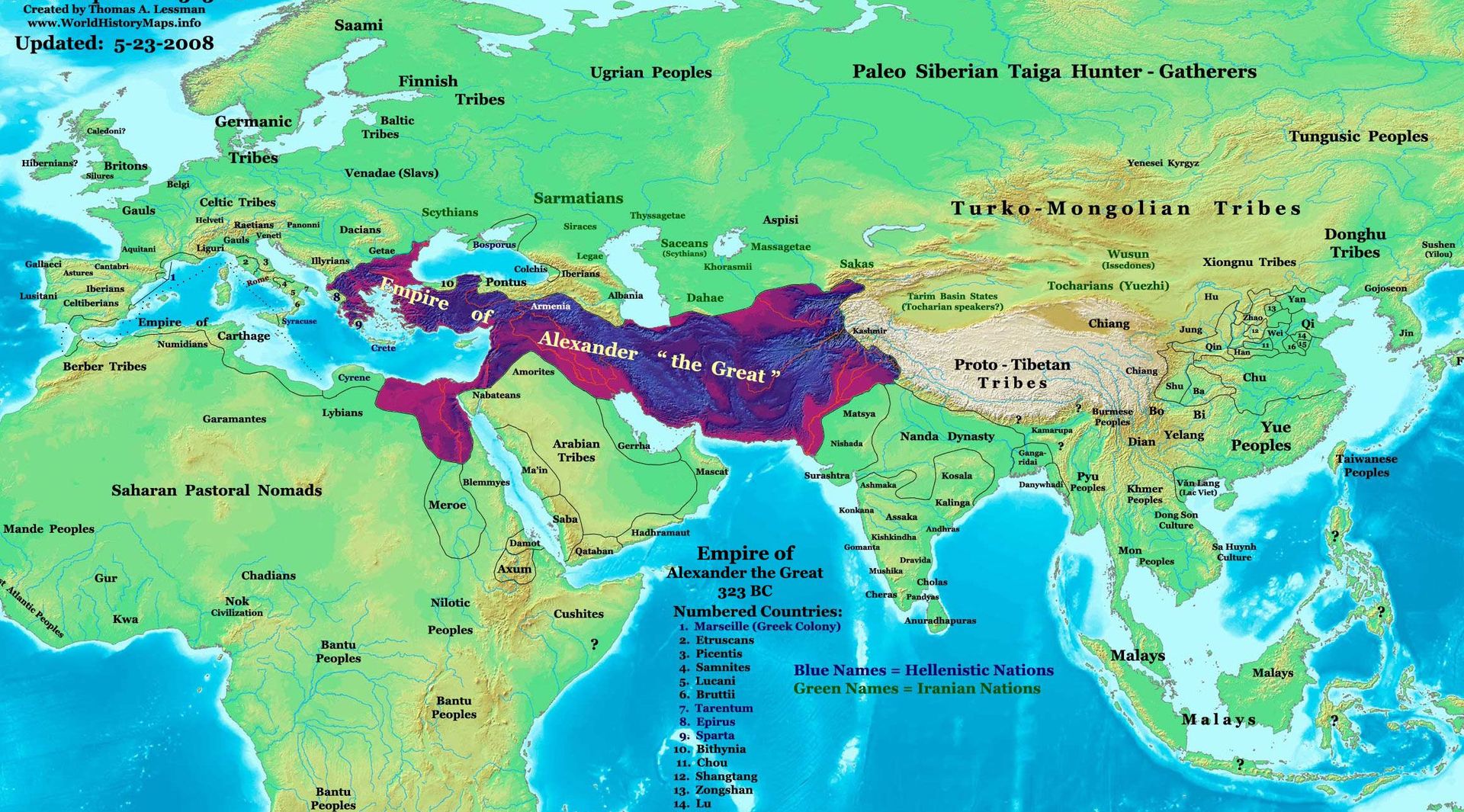
THE SPREAD OF GREEK WISDOM
About five centuries before Christ, a big flowering of human thinking sprang up in Greece. Socrates began to teach the youth of Athens to think deeply. Two things he concentrated on were what makes a person good, and how to understand this pursuit of goodness. For the first he used the words “the just man” and for the second “wisdom”. This search for wisdom became known as “Philosophy”, the Greek word meaning “the love of wisdom”. Socrates’ foremost student was Plato, whose great disciple was Aristotle. They are all known as the founders of Western Philosophy.
Philip, king of Macedonia, called Aristotle to his capital to oversee the education of his precocious son, Alexander (the Great) Once he became king, Alexander set out to conquer the empires of Persia, Egypt and parts of India. He died at the age of 32, but his Greek empire endured, and it ensured that Greek culture and thought became the dominant culture for centuries. When, the Roman Empire grew and reached its pinnacle about the time of Christ, covering the whole of the Mediterranean world and much of the Near East, it was still practicing Greek culture and the common language of the empire was Greek - Latin only took over after 300 AD.
That is why most of the New Testament was written by Jews, but mainly in Greek. That is because the majority of Jews lived outside Israel all over the Empire. Even the Greek Version of the Old Testament compiled by the Hebrew School in Alexandria, Egypt, in the century before Christ was the one most widely used worldwide. That is the source of our Bible.
This domination of Greek philosophy and culture posed a special problem for the Jews. Their thought and culture was formed through their centuries old journey with God. Their geographical position on the eastern shores of the Mediterranean was at the point where Asia, Africa and Europe met - it was the strategic crossroad of three continents, and everyone wanted to control it. The Jews never had a quiet life because it was constantly fought over by the big powers. And all these powers sought to influence them away from their calling to be the People of God. For centuries before and after Christ it was the Greek philosophy which was their greatest challenge.
When, in 1 Corinthians 1: 22, St Paul’s states that the “Greeks look for Wisdom”, he sums up Greek thought, by rightly identifying it as a huge Human effort to attain goodness. Although the search for goodness is central to our humanity, Jewish/Christian wisdom knows that this can only be achieved in humble partnership with our Creator. We, like Paul, know that this humble partnership was achieved and is gifted to us by the Crucified Christ.
The wisdom books of the Old Testament
If we want to understand the Wisdom books of the Old Testament (Ecclesiastes, Proverbs, Wisdom, Job, Ecclesiasticus-Sirach), we must understand that they were written in the two centuries before Christ, to counter the powerful influence of Greek philosophy. The key to them, is the affirmation that wisdom, far from being a purely human activity, only flowers in relationship with God.
Their authors used a common form of writing of their time by styling their books as being written by a revered character from the ancient Jewish past like King Solomon. The early Christian authorities understood this, but, as the centuries rolled on, people came to believe that these ancient sages were the real authors of these books, rather than their being much more recent responses to the Greek philosophy which dominated thought in the few centuries before Christ.
The wars of the Macabees was also part of the battle between the two cultures, Jewish and Greek. These two opposing world views were the only ones with any staying power in the centuries before Christ. While the Greek dominated for a long time, the Jewish world-view spread all over the Roman empire as most Jews emigrated and traded, preparing the way for Christianity's vigorous spread. It was first preached to the exiled Jews all over the Roman Empire, but quickly spread to the other peoples.
In the middle ages, the great insights of Greek philosophy were blended into our modern thinking by such great geniuses as St Thomas Aquinas.